Text
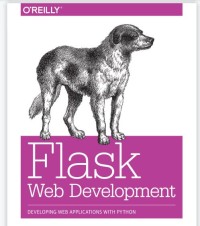
Flask Web Development
Flask stands out from other frameworks because it lets developers take the driver’s seat
and have full creative control of their applications. Maybe you have heard the phrase
“fighting the framework” before. This happens with most frameworks when you decide
to solve a problem with a solution that isn’t the official one. It could be that you want to
use a different database engine, or maybe a different method of authenticating users.
Deviating from the path set by the framework’s developers will give you lots of
headaches.
Flask is not like that. Do you like relational databases? Great. Flask supports them all.
Maybe you prefer a NoSQL database? No problem at all. Flask works with them too.
Want to use your own homegrown database engine? Don’t need a database at all? Still
fine. With Flask you can choose the components of your application or even write your
own if that is what you want. No questions asked!
The key to this freedom is that Flask was designed from the start to be extended. It comes
with a robust core that includes the basic functionality that all web applications need
and expects the rest to be provided by some of the many third-party extensions in the
ecosystem and, of course, by you.
In this book I present my workflow for developing web applications with Flask. I don’t
claim to have the only true way to build applications with this framework. You should
take my choices as recommendations and not as gospel.
Most software development books provide small and focused code examples that
demonstrate the different features of the target technology in isolation, leaving the “glue”
code that is necessary to transform these different features into a fully working appli‐
cations to be figured out by the reader. I take a completely different approach. All the
examples I present are part of a single application that starts out very simple and is
expanded in each successive chapter. This application begins life with just a few lines of
code and ends as a nicely featured blogging and social networking application.
Who This Book Is For
You should have some level of Python coding experience to make the most of this book.
Although the book assumes no previous Flask knowledge, Python concepts such as
packages, modules, functions, decorators, and object-oriented programming are as‐
sumed to be well understood. Some familiarity with exceptions and diagnosing issues
from stack traces will be very useful.
While working through the examples in this book, you will spend a great deal of time
in the command line. You should feel comfortable using the command line of your
operating system.
Modern web applications cannot avoid the use of HTML, CSS, and JavaScript. The
example application that is developed throughout the book obviously makes use of
these, but the book itself does not go into a lot of detail regarding these technologies
and how they are used. Some degree of familiarity with these languages is recommended
if you intend to develop complete applications without the help of a developer versed
in client-side techniques.
I released the companion application to this book as open source on GitHub. Although
GitHub makes it possible to download applications as regular ZIP or TAR files, I strongly
recommend that you install a Git client and familiarize yourself with source code version
control, at least with the basic commands to clone and check out the different versions
of the application directly from the repository. The short list of commands that you’ll
need is shown in “How to Work with the Example Code ” on page xiii. You will want to
use version control for your own projects as well, so use this book as an excuse to learn
Git!
Finally, this book is not a complete and exhaustive reference on the Flask framework.
Most features are covered, but you should complement this book with the official Flask
documentation.
Availability
Detail Information
- Series Title
-
-
- Call Number
-
12
- Publisher
- CA United States of America. : O-REILLY., 2014
- Collation
-
238 pgs
- Language
-
English
- ISBN/ISSN
-
978-1-449-37262-0
- Classification
-
NONE
- Content Type
-
text
- Media Type
-
other
- Carrier Type
-
-
- Edition
-
first edition
- Subject(s)
- Specific Detail Info
-
-
- Statement of Responsibility
-
-
Other version/related
No other version available
File Attachment
Comments
You must be logged in to post a comment
 Computer Science, Information & General Works
  Philosophy & Psychology
  Religion
  Social Sciences
  Language
  Pure Science
  Applied Sciences
  Art & Recreation
  Literature
  History & Geography